

We held a tasting event in Amstelveen, the Netherlands, serving three different dishes made with Koya Tofu. The results gave us an opportunity to see how people responded to Koya Tofu in different dishes and whether they could imagine incorporating it into their everyday meals. The tasting took place in May 2024.
This article presents the ratings for each dish, along with what we learned from the results.

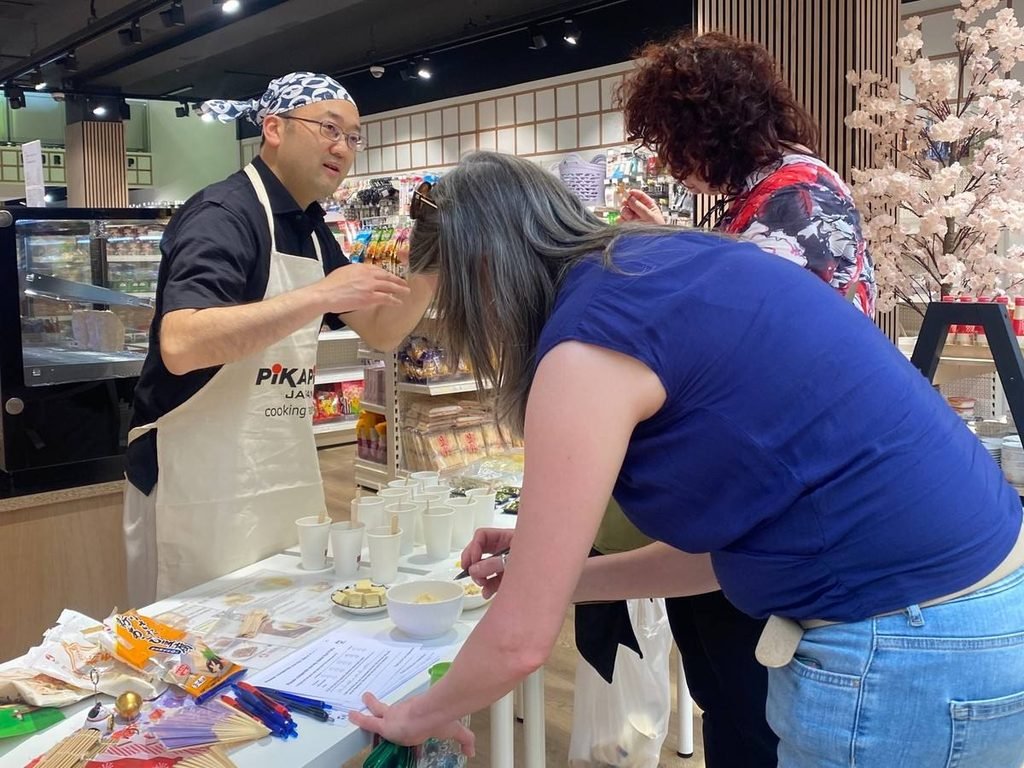
About the Tasting
| Date | May 2024 |
| Location | A Japanese food and lifestyle store in Amstelveen, the Netherlands |
| Participants | General visitors |
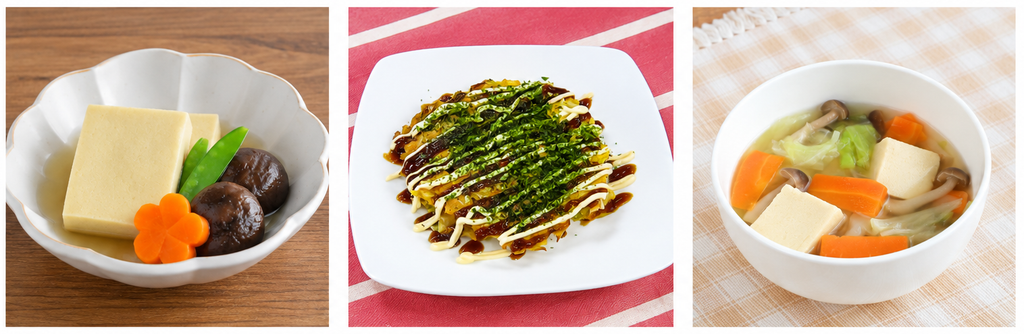
| Dishes served | Simmered Koya Tofu, okonomiyaki, soup |
This was not a formal consumer study, but an exploratory tasting held as an in-store event at a Japanese food and lifestyle retailer.
How Were the Three Dishes Rated?
Participants were asked to rate the taste of each dish on a scale from 1 to 5.
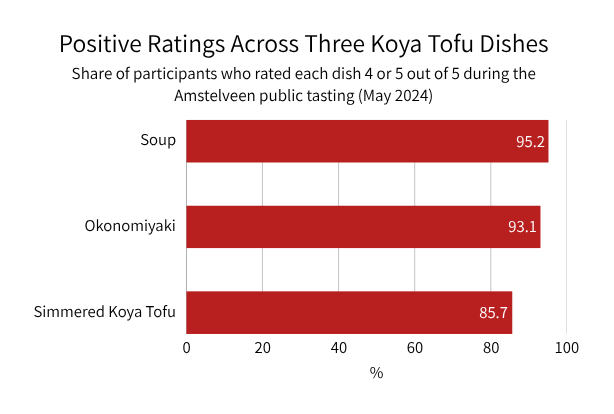
Most of the valid ratings for all three dishes were 4 or above, suggesting that all three were generally well received.
So, how did each dish perform?
Simmered Koya Tofu
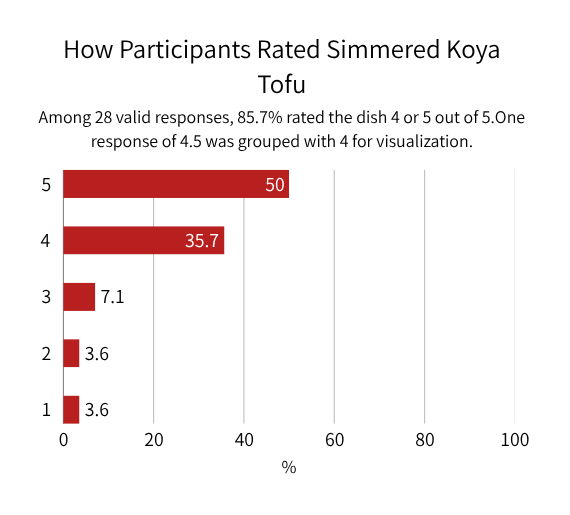
The simmered Koya Tofu was positively received by most of the people who rated it. Koya Tofu absorbs liquid particularly well, so we think this may have helped the flavour of the broth come through clearly.
Okonomiyaki with Koya Tofu Powder
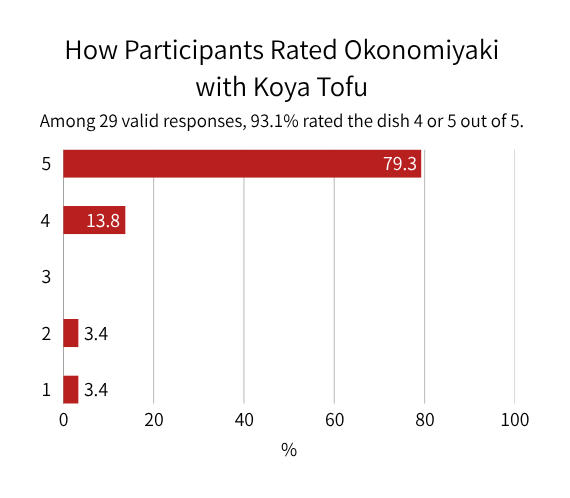
Okonomiyaki received the largest number of responses among the three dishes and also had the highest average rating, at 4.62.
For this recipe, powdered Koya Tofu was used in place of wheat flour. Its presence was barely noticeable in either the flavour or texture of the finished dish, allowing the neutral flavour of Koya Tofu to work particularly well in this format. We think this may have been one reason for the high rating. Another possible factor was the okonomiyaki sauce itself, whose flavour seemed to appeal to the Dutch participants.
Consommé Soup Made with a Stock Cube
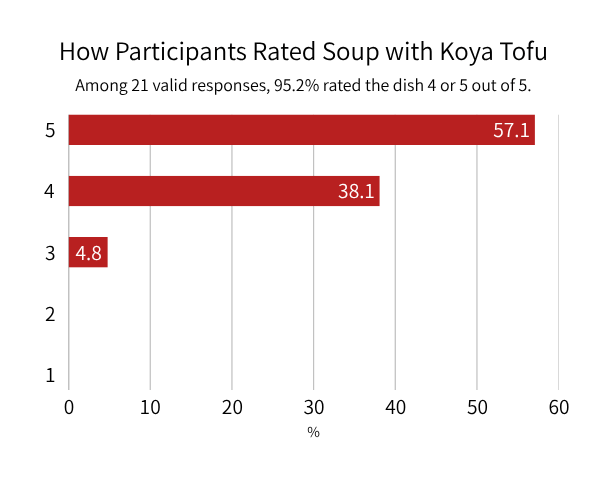
Like the other two dishes, the soup was very positively received. One participant wrote:
“It seems like I could easily add Koya Tofu to the vegetable soup I make at home.”
We were particularly pleased by this comment. The participant had not only enjoyed the taste, but could also picture using Koya Tofu in their own everyday cooking.
Three dishes may have been slightly too much to taste and evaluate during an informal in-store event, which may partly explain the variation in the number of responses. Even so, the results suggested that Koya Tofu could be accepted in several quite different types of dishes.
What the Suggested Uses Tell Us About Its Cooking Potential
Finally, we asked participants whether they could imagine using Koya Tofu in their everyday meals and, if so, what kinds of dishes they might use it in. We received a wide range of ideas:
- with rice
- with soy sauce
- in fried rice or nasi goreng
- in vegetable broth or soup
- in salads
- in bowl meals
- in stews
- in okonomiyaki
- in mapo tofu or crab omelette
- in Indian dishes
- in Iranian dishes
Some participants mentioned dishes they had just tasted, such as soup and okonomiyaki. Others made their own connections, imagining Koya Tofu in rice dishes, Indian food, Iranian food and other foods they were already familiar with. This gave us a much broader sense of its potential in different types of everyday cooking.
Interested in Exploring Koya Tofu Applications?
As with this tasting event, we continue to explore how Koya Tofu could fit into the way people eat in Europe. If you are a food business interested in exploring its potential, please contact us.