
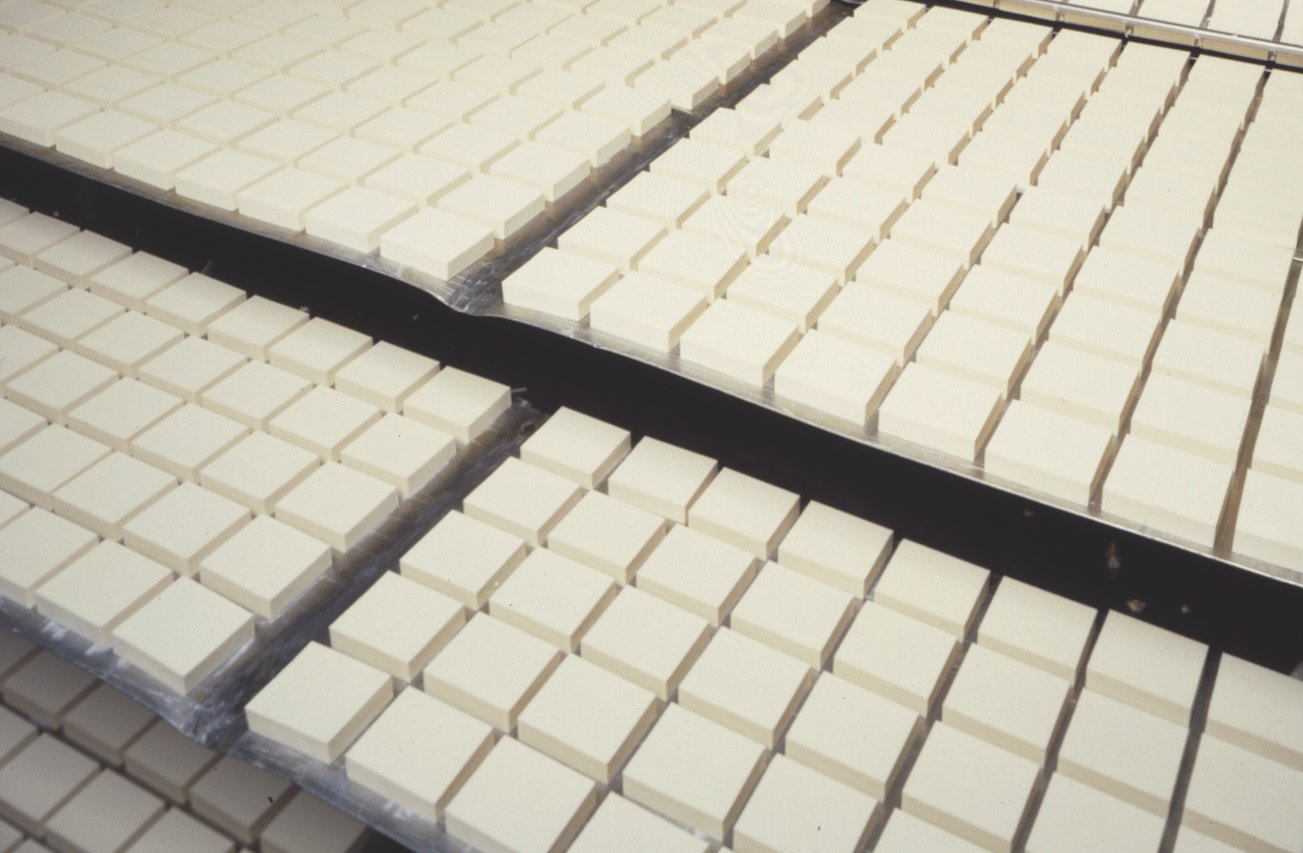
A Millennium-Old Preservation Technology Producing a Modern Plant Protein
No refrigeration. No synthetic additives.
Yet it remains shelf-stable for over a year at ambient temperature, and contains approximately four times more protein per 100g than plain tofu (*1). This is KoyaTofu.
Believed to have originated during the Kamakura period through monastic innovation, this plant based food is gaining strategic relevance in Europe, not because of nostalgia or a passing interest in Japanese cuisine, but because it structurally addresses the systemic challenges accompanying the accelerated transition toward plant based proteins.
The Key to Its Nutritional Density: Process Engineering
The answer is both simple and technically sophisticated.
Soybeans, the sole primary ingredient, are inherently high in protein, with a favorable essential amino acid profile comparable to animal protein sources. Tofu made from these soybeans undergoes prolonged freezing, followed by approximately three weeks of low-temperature aging. This multi stage process fundamentally alters its internal structure while concentrating nutrients.
Plain tofu contains approximately 73.8% water, whereas KoyaTofu contains 7.1% or less (*1). This dramatic reduction in moisture content is a primary driver of its nutritional density.
Freezing also creates a porous internal matrix. During cooking, this structure absorbs broths, stocks, and seasoning liquids deeply and efficiently. The transformation is not merely textural. The porous structure enhances physical access to protein during digestion, supporting improved bioavailability. In other words, both concentration and absorption are elevated.
Shelf Stability as a Strategic Nutritional Multiplier
After aging, KoyaTofu is fully dehydrated. Low water activity inhibits microbial growth, allowing long term ambient storage without refrigeration.
If this appears to be merely a logistical advantage, the implications are broader. Eliminating cold-chain dependency reduces transportation and storage related CO₂ emissions. Lower spoilage risk reduces food waste. Shelf stable protein can be distributed reliably in regions with limited infrastructure or during emergency conditions.Its nutritional value is already noteworthy.
Industry Challenges, and KoyaTofu’s Structural Response
Demand for plant based protein is no longer speculative; it is an established part of how the food industry now operates. The harder question is whether the current generation of products is actually meeting expectations.
Are meat alternatives truly “natural”?
Is the level of processing excessive?
Is dependence on refrigerated supply chains sustainable?
Are consumers fatigued by long ingredient lists and engineered flavors?
KoyaTofu offers clear responses:
- Ingredients: soybeans (97%), potassium carbonate (2%), coagulant (1%)
- Production: freezing, aging, dehydration
- No additives beyond the coagulant
- No refrigeration required
- High protein density
- Porous structure enabling efficient flavor absorption
For chefs, it functions as a matrix that absorbs dashi, broths, and sauces without disrupting flavor architecture.
For buyers, it minimizes shrinkage and eliminates cold shelf dependency.
For consumers, it reconciles simple labeling with high nutritional density.
Beyond “Traditional Food”: A Transcultural Design Logic
When introduced merely as a “Japanese traditional product,” KoyaTofu risks being perceived as exotic, interesting, but culturally distant.
Viewed through a design and systems perspective, however, it transcends geography.
Without synthetic additives or refrigeration technology, a centuries old production method achieves what many modern products pursue through far more complex means: long ambient shelf life, high protein density, and a structure that absorbs flavor efficiently.
These attributes align closely with contemporary food innovation goals. A millennium ago, without refrigeration technology or synthetic additives, a food was engineered through climate and method alone to achieve what modern product development now seeks.
That is the true value of KoyaTofu.
For inquiries and sample requests: Contact
*1: KoyaTofu data: Asahimatsu Foods Co., Ltd. “KoyaTofu( Slice) 49.5g” product nutritional label/ Plain tofu data: Ciqual French food composition table, ANSES, ciqual.anses.fr “Tofu, plain, prepacked” (Confidence Code A)
KoyaTofu contains 51.7g of protein per 100g dry weight, nearly four times that of plain tofu (13.4g/100g). This difference reflects the concentration effect of the freeze drying process.
Asahimatsu KoyaTofu Nutrition
| Ingredients | |
| Soybean | 97% |
| Potassium carbonate | 2% |
| Coagulant for Tofu | 1% |
| Nutrition Facts (Per 100g): | |
| Calories | 526kcal |
| Water | 7.1g |
| Protein | 51.7g |
| Total Fat | 34.6g |
| Of which Saturated fatty acids | 4.3g |
| Carbohydrate | 3.1g |
| Of which sugars | 0.8g |
| Sodium | 7.2mg |
| Salt equivalent | 0.0g |
| Ash | 3.5g |
| Calcium | 490mg |
| Iron | 5.8mg |
| Soluble dietary fiber | 2.3g |