
* The information on this page is intended for the EU market and other European markets. Regulations may vary by country. Please contact us for the most up-to-date information.
If you are seeking a plant‑based protein ingredient, Koya Tofu—consumed in Japan for approximately 800 years—may be an attractive option.
Despite its simple ingredients, Koya Tofu offers an exceptional nutritional profile, characterized by high protein and low carbohydrate content. It aligns well with current European dietary trends and the growing demand for sustainable food systems.
1. Over 50% of Its Nutritional Content Is Plant-Based Protein
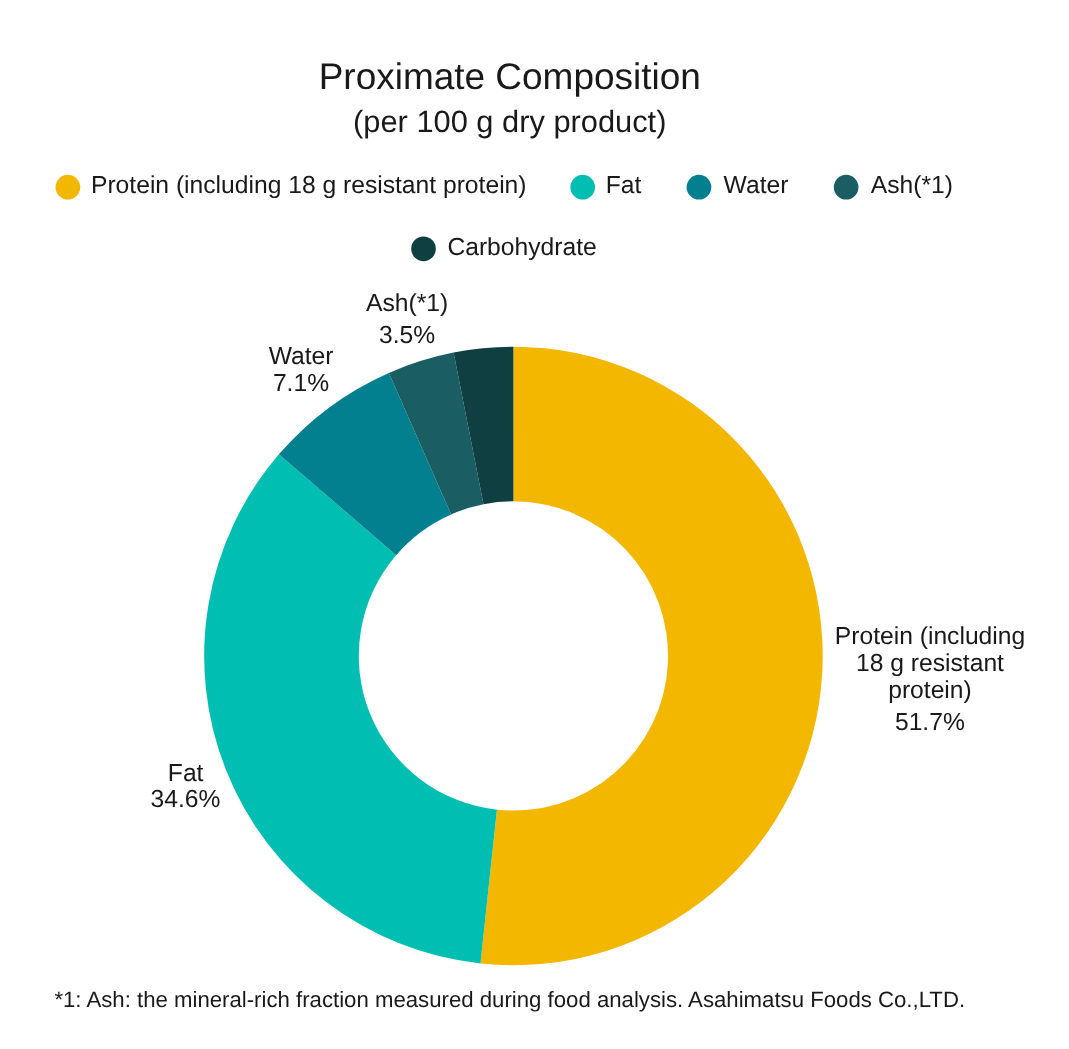
Koya Tofu contains approximately 51.7 g of protein per 100 g (dry weight), meaning that nearly half of its total mass consists of protein of plant origin.
This is a notably high level among plant-based foods and allows Koya Tofu to be used as a convenient protein option in everyday meals.
Protein contributes to the growth and maintenance of muscle mass and to the maintenance of normal bones, when consumed as part of a varied and balanced diet and a healthy lifestyle.
2. A Distinctive Feature: Resistant Protein
Approximately 30% of the total protein in Koya Tofu (around 18 g per 100 g of product) consists of so‑called resistant protein, a type of protein that is less readily digested.
Because of these digestion‑resistant properties, resistant protein has been discussed in scientific literature for its fibre‑like characteristics, and studies have explored its relationship with various blood markers.
Scientific studies conducted in Japan have examined the relationship between Koya Tofu intake and various blood markers, including metabolic indicators. These findings have not been evaluated within the EU nutrition and health claims framework, and there is currently no authorised EU health claim for Koya Tofu or resistant protein. (*1).
3. High Protein, Low Carbohydrate
Contains considerably less carbohydrate per 100 g (dry weight) than cereals and tubers.
Its combination of a high protein content with relatively little carbohydrate within a single ingredient offers practical advantages for:
- sports nutrition formulations
- wellness‑oriented food products
- menu development for consumers who monitor their carbohydrate intake
| Food | Protein | Fat | Carbohydrate | Calcium |
|---|---|---|---|---|
| Wheat flour (Type 55, for bread) | 9.3g | 1.0g | 73.7g | 24mg |
| Potato (New, raw) | 1.9g | 0.3g | 15.8g | 10mg |
| Tofu, plain (prepacked) | 13.4g | 8.5g | 2.9g | 100mg |
| Koya Tofu (freeze-dried, ready to use) | 51.7g | 34.6g | 3.1g | 490mg |
4. Dairy-Free and Gluten-Free
Koya Tofu is made from a minimal set of ingredients:
- soybeans (97%)
- potassium carbonate (2%)
- tofu coagulant (1%)
It contains no milk or wheat ingredients.
This makes Koya Tofu suitable for:
- vegan diets
- consumers who avoid dairy
- consumers who avoid gluten
As a result, Koya Tofu is a versatile ingredient for product development and menu design, without requiring complex reformulation.
5. Rich in Minerals (Calcium and Iron)
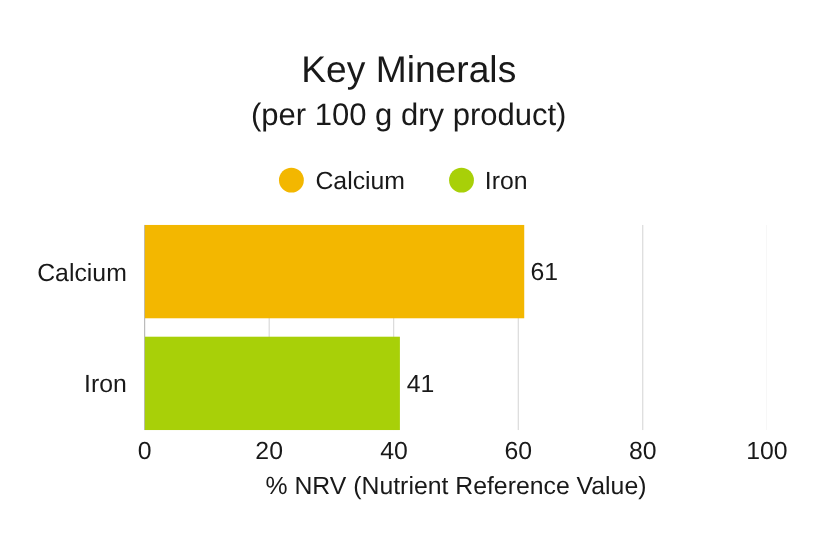
Per 100 g (dry weight), Koya Tofu contains:
- 490 mg of calcium
- 5.8 mg of iron
For comparison, 100 ml of milk contains approximately 120 mg of calcium, highlighting the high concentration of nutrients in Koya Tofu.
Koya Tofu is a source of calcium and iron. Calcium contributes to the maintenance of normal bones and teeth, to normal energy‑yielding metabolism and to normal muscle function.
Iron contributes to normal formation of red blood cells and haemoglobin and to the maintenance of normal cognitive function.
For individuals who avoid dairy or follow predominantly plant‑based diets, attention to calcium intake is important, and Koya Tofu can be included as one of several dietary sources of calcium and iron.
Conclusion
The high nutrient density of Koya Tofu is closely linked to its unique production process, which involves intensive pressing, slow freezing, and approximately three weeks of low‑temperature aging.
In addition to its nutritional characteristics, Koya Tofu offers a long shelf life (up to 13 months at ambient temperature) and does not require refrigerated transport.
These features may help to reduce food waste and improve logistical flexibility compared with more perishable chilled tofu products.
In this way, Koya Tofu represents an interesting option within the context of modern, sustainable food systems.
For inquiries and sample requests: Contact
*1: Kori-tofu Making Processes Increase Hi-molecular-weight Fraction(HMF), Japanese Pharmacology & Therapeutics vol.44 no.4 613(2016)